A technical SEO audit is the single most critical diagnostic process an agency or business can execute to uncover hidden crawl blocks, indexation issues, and revenue-draining architecture errors. This comprehensive technical SEO audit checklist for 2026 provides our complete agency framework for auditing enterprise websites.
1. Crawlability & Indexation Directives
Ensure that search engine bots can discover and crawl every critical page without wasting crawl budget on duplicate parameters, staging environments, or faceted search loops.
- Robots.txt Analysis: Verify that critical CSS, JS, and high-value category pages are not inadvertently blocked.
- XML Sitemaps: Ensure sitemaps are dynamically generated, contain only 200 OK indexable canonical URLs, and are referenced in robots.txt and Google Search Console.
- HTTP Status Codes: Audit redirect chains, 301 loops, 404 errors, and 5xx server drops.
2. Canonicalization & Duplicate Content
Prevent keyword cannibalization and dilution by establishing strict self-referential canonical tags across all pages and proper parameters for pagination and sorting.
3. Core Web Vitals & Page Experience
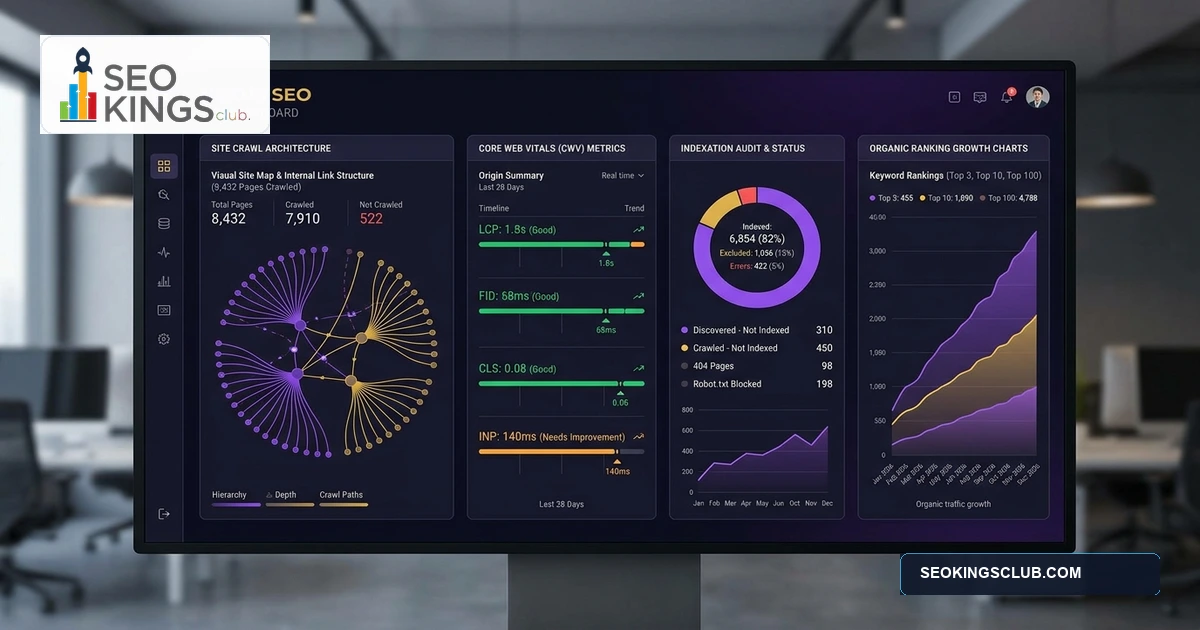
Modern algorithmic rankings heavily reward sites that pass Google’s Core Web Vitals thresholds:
- Largest Contentful Paint (LCP): Keep hero elements rendering under 2.5 seconds.
- Interaction to Next Paint (INP): Eliminate main-thread JavaScript blocking for snappy responsiveness (<200ms).
- Cumulative Layout Shift (CLS): Maintain layout stability (<0.1) by defining explicit dimensions on images and banners.
4. Structured Data & Entity Optimization
Implement comprehensive JSON-LD schema markup for Organization, Article, FAQPage, and BreadcrumbList to capture rich snippets and generative AI Overview citations.
5. Internal Linking & Architecture Hierarchy
Ensure a flat architecture where no essential page is more than 3 clicks away from the homepage, using descriptive keyword-rich anchor text throughout content clusters.